
Éire Sounds
Irish Music Discovery Platform
An immersive, multimedia web experience connecting people with Irish traditional and contemporary music through stories, places, and sound, designed for both cultural insiders and curious newcomers.
UX / UI Design
User Research
Website Design
Brand & Visual Design
| My Role | Scope | Team | Output |
|---|---|---|---|
| UX/UI Designer | Wireframes, visual identity & build | 3 People (collaborative research & strategy) | Live interactive website |
01. Problem
A rich culture with no digital home
Ireland is internationally recognised for its musical heritage. Traditional music — from sean-nós singing to fiddle sessions in Cobblestone Pub — forms the beating heart of community life. Yet when it comes to discovering this culture online, the experience falls flat.
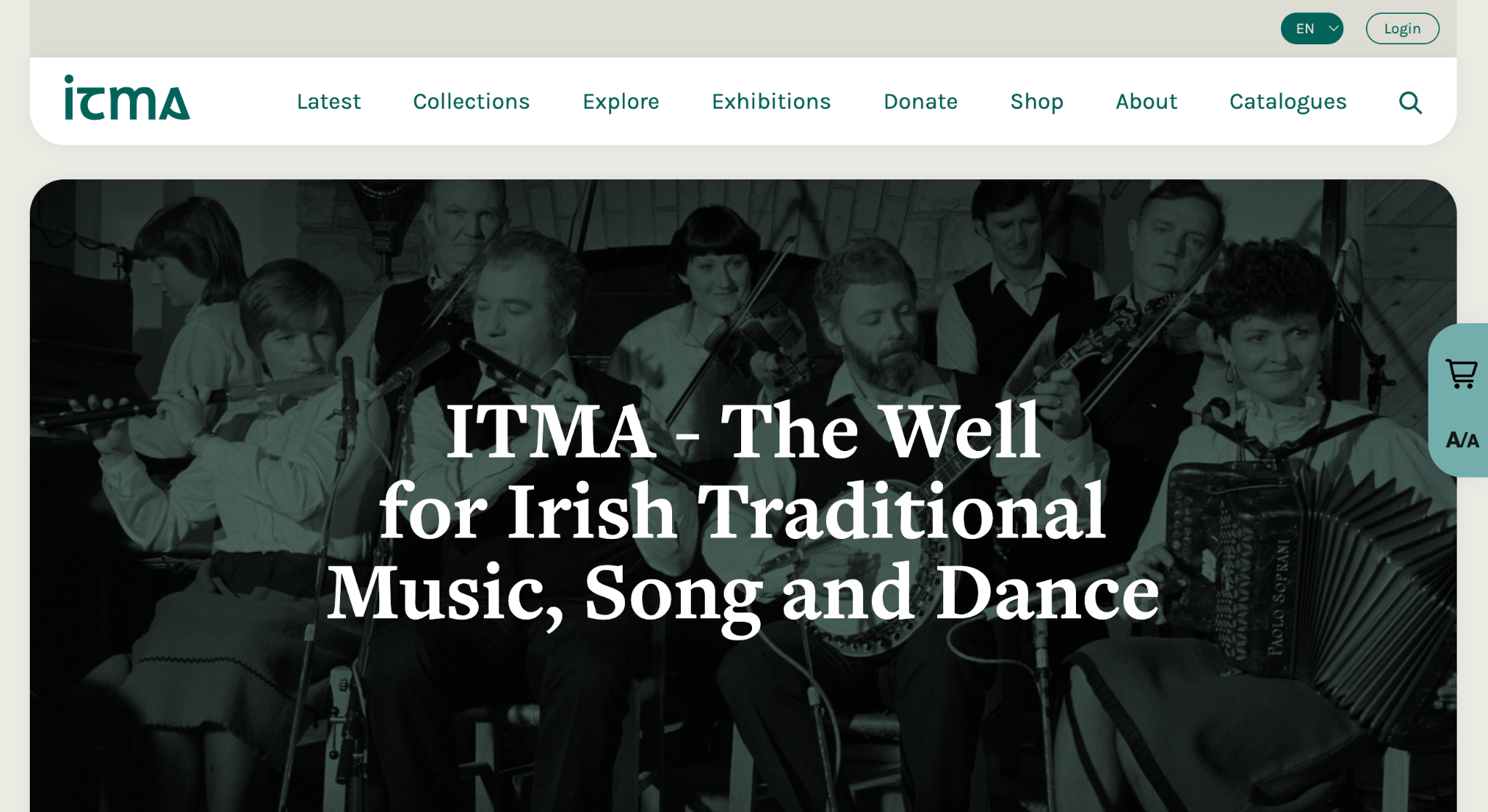
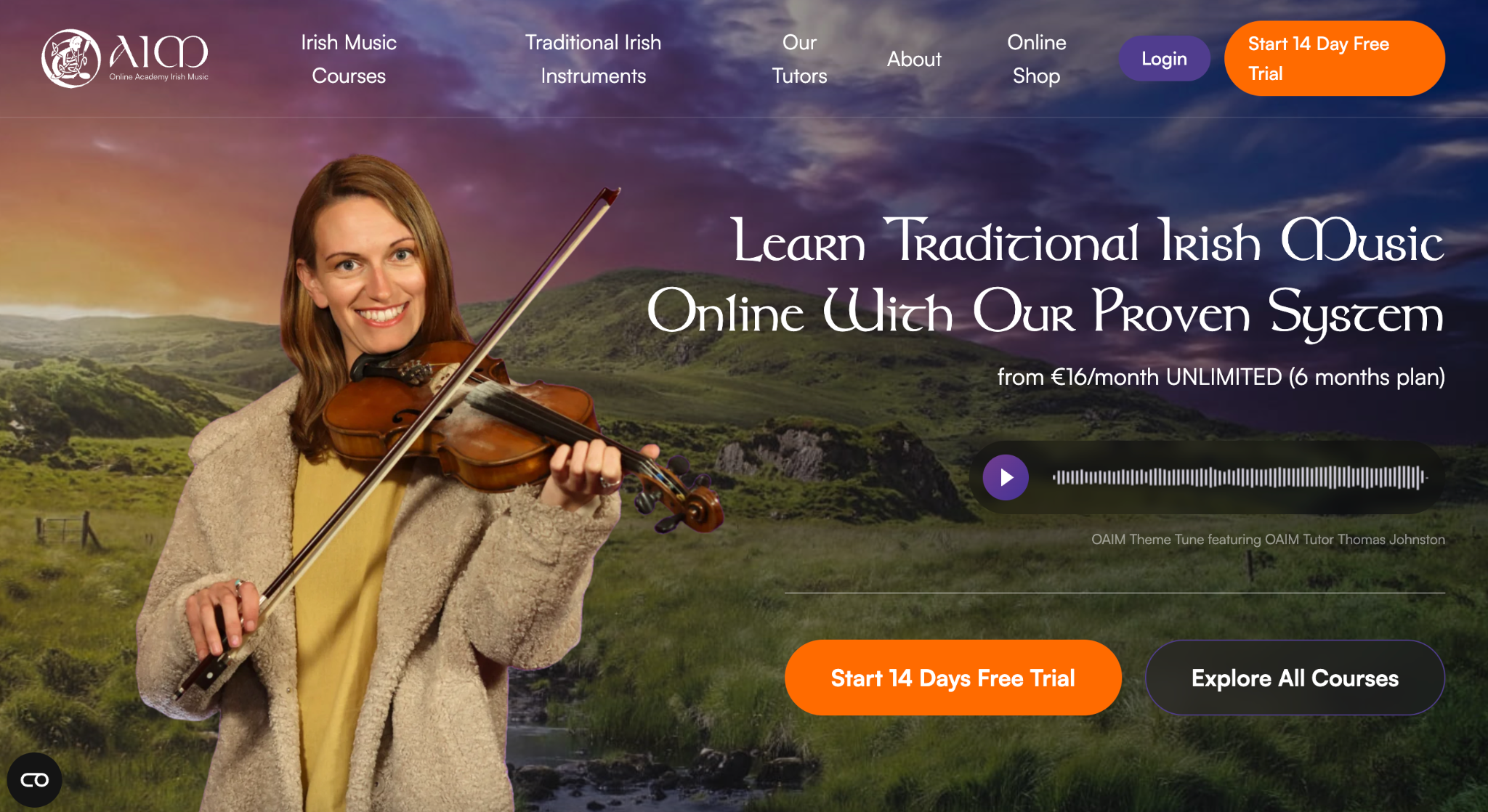
Existing platforms are either overly academic, like the Irish Traditional Music Archive, which is rich in content but overwhelming for general audiences, or purely tourist-facing, offering fixed GPS routes with no emotional depth. None of them merge culture, storytelling, and interactive discovery in a single, accessible place.
What was missing wasn't content. What was missing was a platform that could make people feel something.
"Many websites and apps give information about Ireland, but few offer real stories and deep experiences related to traditional music. This project was made to change that."
— Éire Sounds Dissertation, Griffith College Dublin, 2025
Fragmented sources
Irish music content is scattered across event pages, YouTube channels, and local community boards with no unified discovery point.
No space for community voices
Real stories from musicians, pub owners, and local families are never platformed. The tradition is alive, but its voices are invisible online.
Tourist-only framing
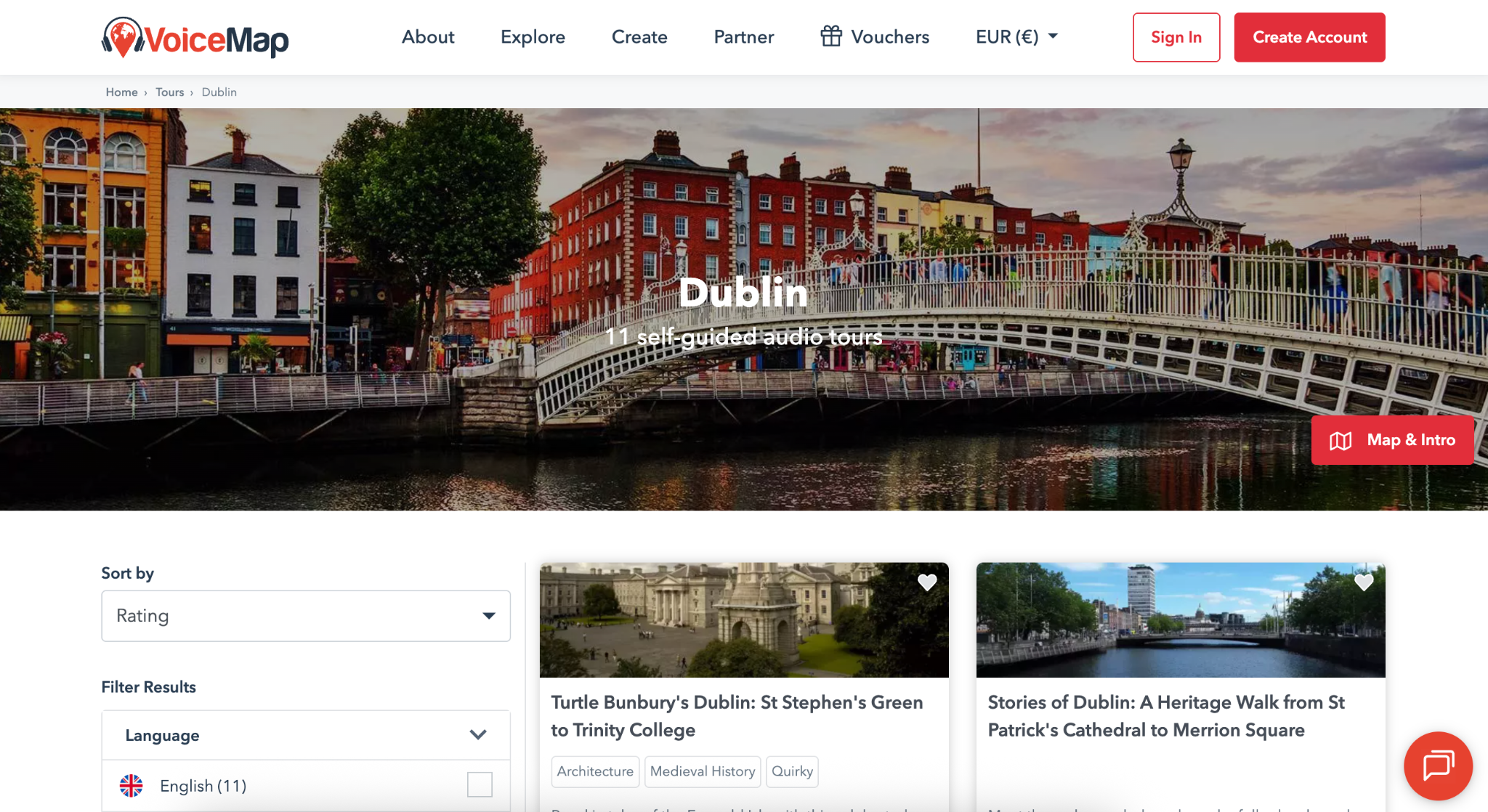
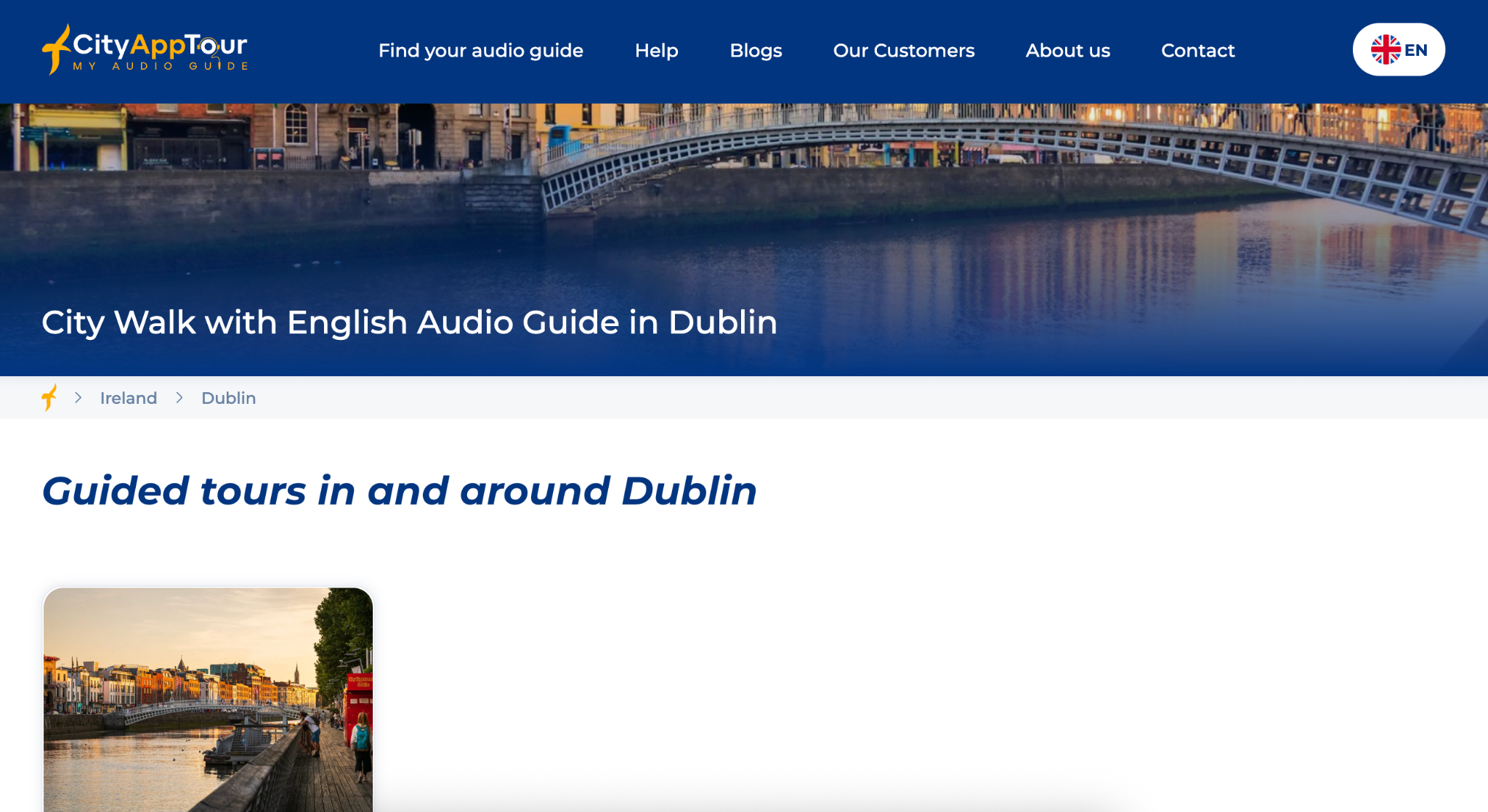
Audio tour apps like VoiceMap or CityAppTour cover Irish landmarks generally, but music is treated as a backdrop — not the subject.
Competitor Audit Screenshots:
VoiceMap, CityAppTour, ITMA, and OAIM homepages
Overly archival
Existing archives serve researchers, not curious newcomers. Content is dense, navigation is unclear, and emotional connection is absent.
02.Goal
One platform for discovery, identity, and connection
The goal was to create a digital platform that bridges the distance between cultural archives and personal experience, where Irish music could be explored not just as information, but as living heritage.
-
Replace cold catalogues with narrative-driven content, real voices, real places, real emotions behind the tradition.
-
Irish locals reconnecting with their roots, and international visitors discovering the culture for the first time, with the same platform meeting both without compromise.
-
Allow users to discover where music actually happens, such as pubs, festivals, streets, and historical landmarks, through an interactive map.
-
Build a space for users to contribute their own stories, photos, and reflections, turning the platform into a living, growing archive.
03. Process
Research, personas, anditeration
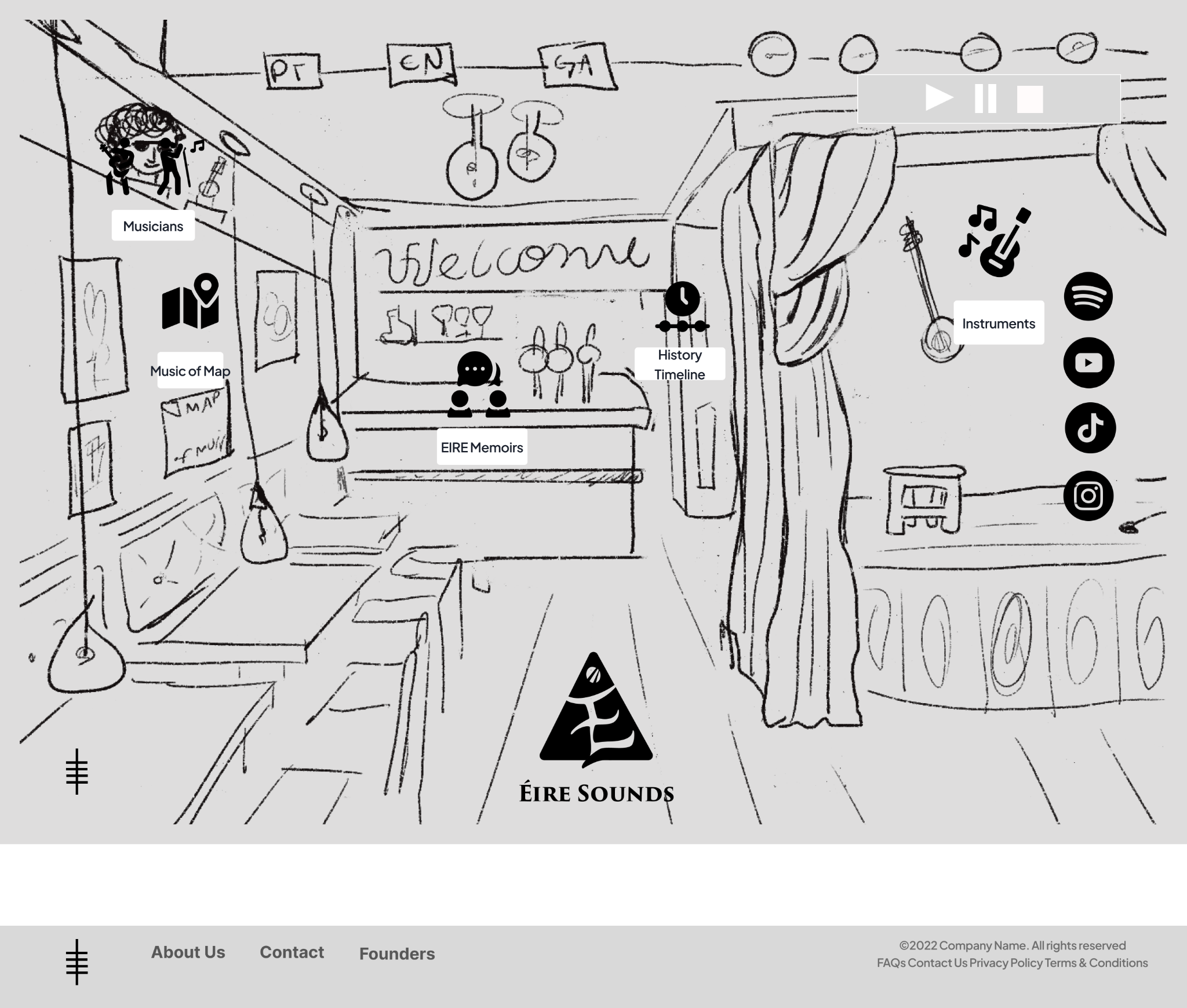
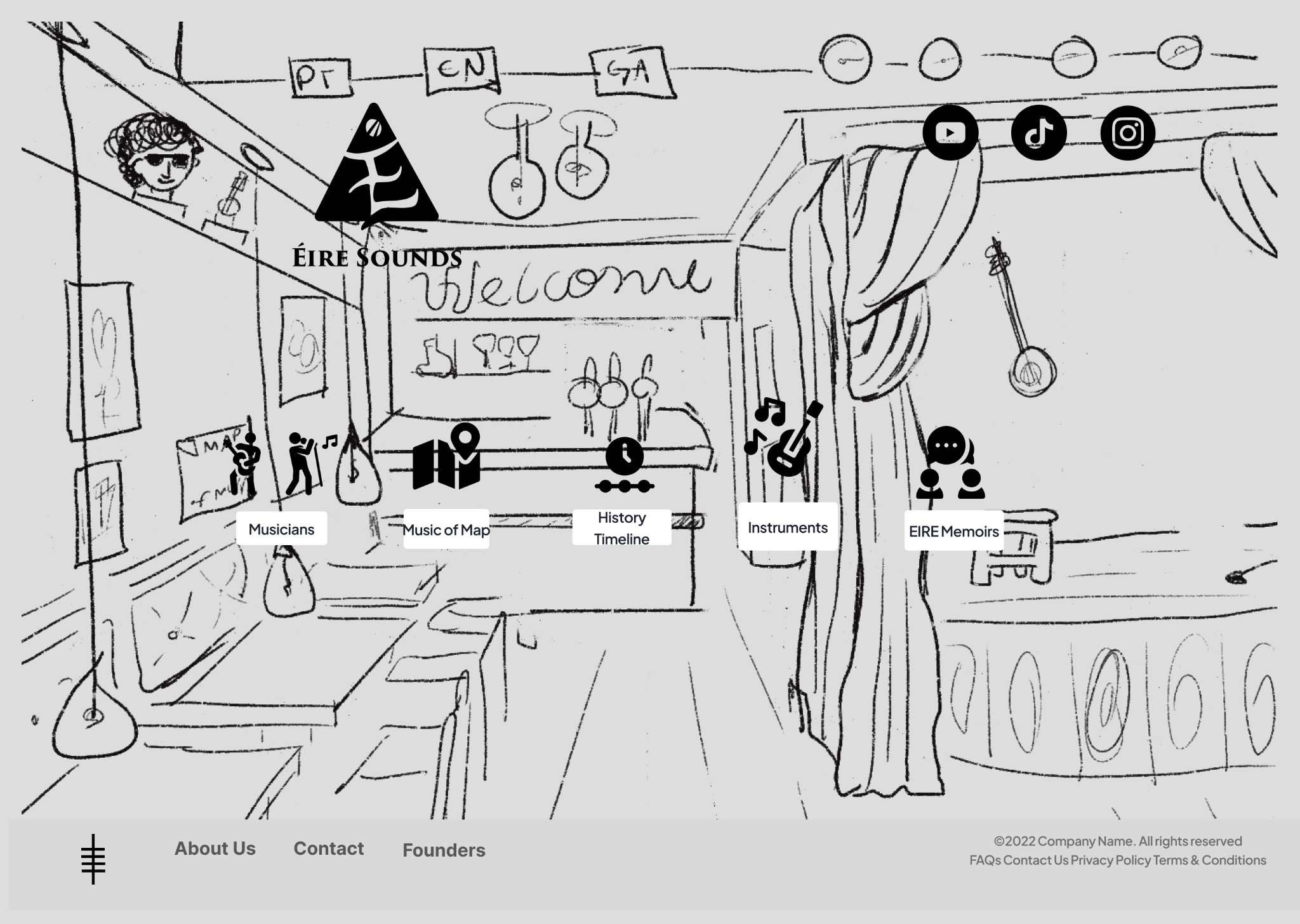
Wireframes — Before & After
key changes: the navigation redesign, page layout evolution, and accessibility improvements
The process began with one question: how do real people, Irish and non-Irish, actually relate to traditional music? The answer came from going to the places where it lives.
Key Insight
"Music was described as a form of identity and memory. Pub owners emphasised its role as a cultural anchor. Storytelling emerged as a key element, embedded in lyrics, tune introductions, and place-based narratives."
Primary Research & Field Interviews
From June to August 2025, we attended pub sessions, visited The Cobblestone and The Brazen Head, went to Fleadh Cheoil 2025 in Wexford, and conducted audio and video interviews with musicians Richie Berger and John Mahon, pub managers, and instrument store owners at Waltons Music.
Quantitative Research & Survey
A survey was distributed to understand user expectations, discovery habits, and emotional drivers. Results confirmed the gap between available digital resources and what people actually wanted: story-led, accessible, emotionally resonant content.
Persona Development
Two detailed personas were built from research insights, representing opposite ends of the audience spectrum and creating productive tension in every design decision.
Information Architecture & Sitemap
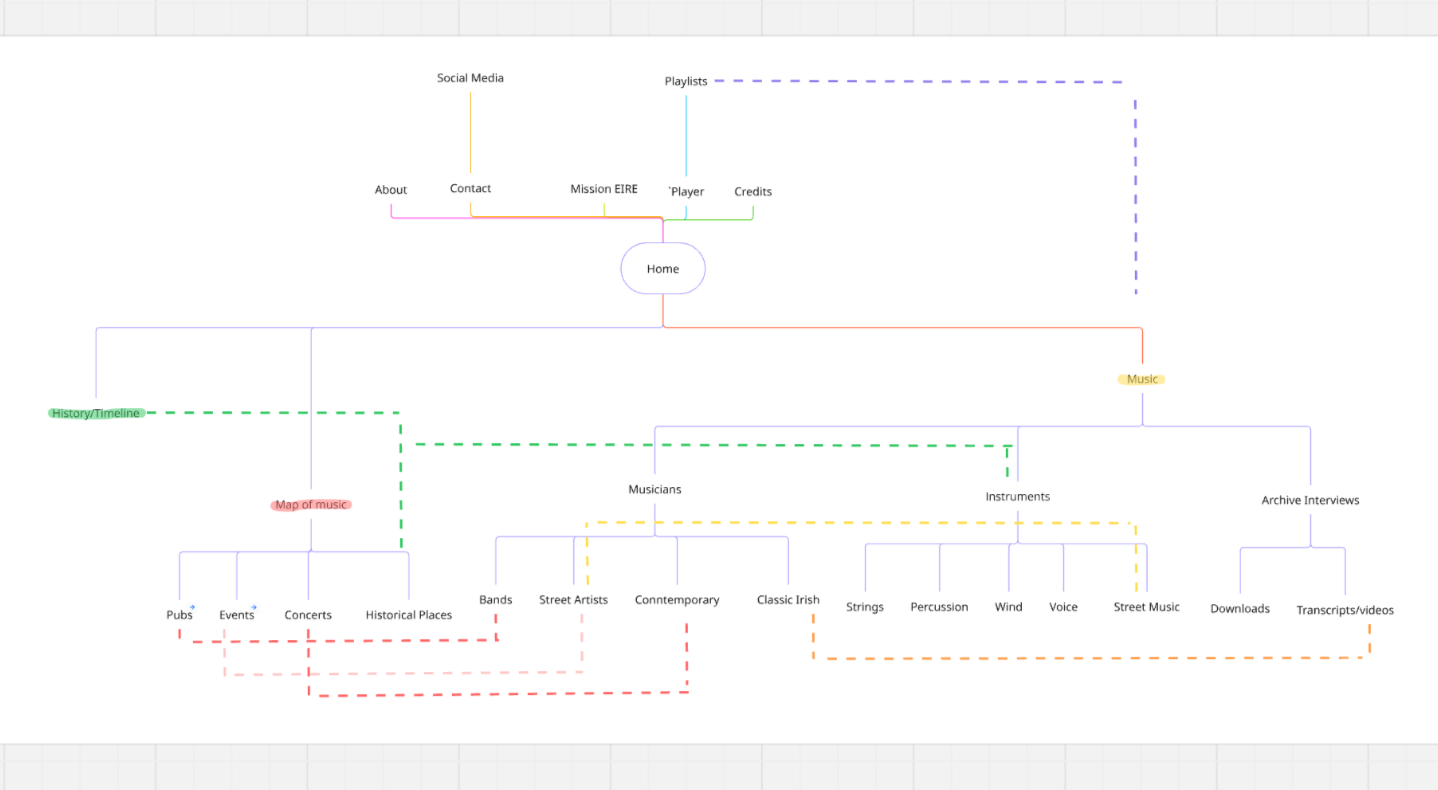
The platform was structured around three core content paths: Music (Musicians + Instruments + Archive Interviews), History Timeline, and Map of Music; built collaboratively on Miro and validated against user journeys.
Wireframing & Prototyping in Figma
Two rounds of wireframes were produced, before and after tutor feedback, refining navigation, layout hierarchy, and accessibility. The original logo-driven menu was replaced with a conventional nav bar after usability issues were identified.
Information Architecture
04. Solution
A content-rich
platform builtaround feeling
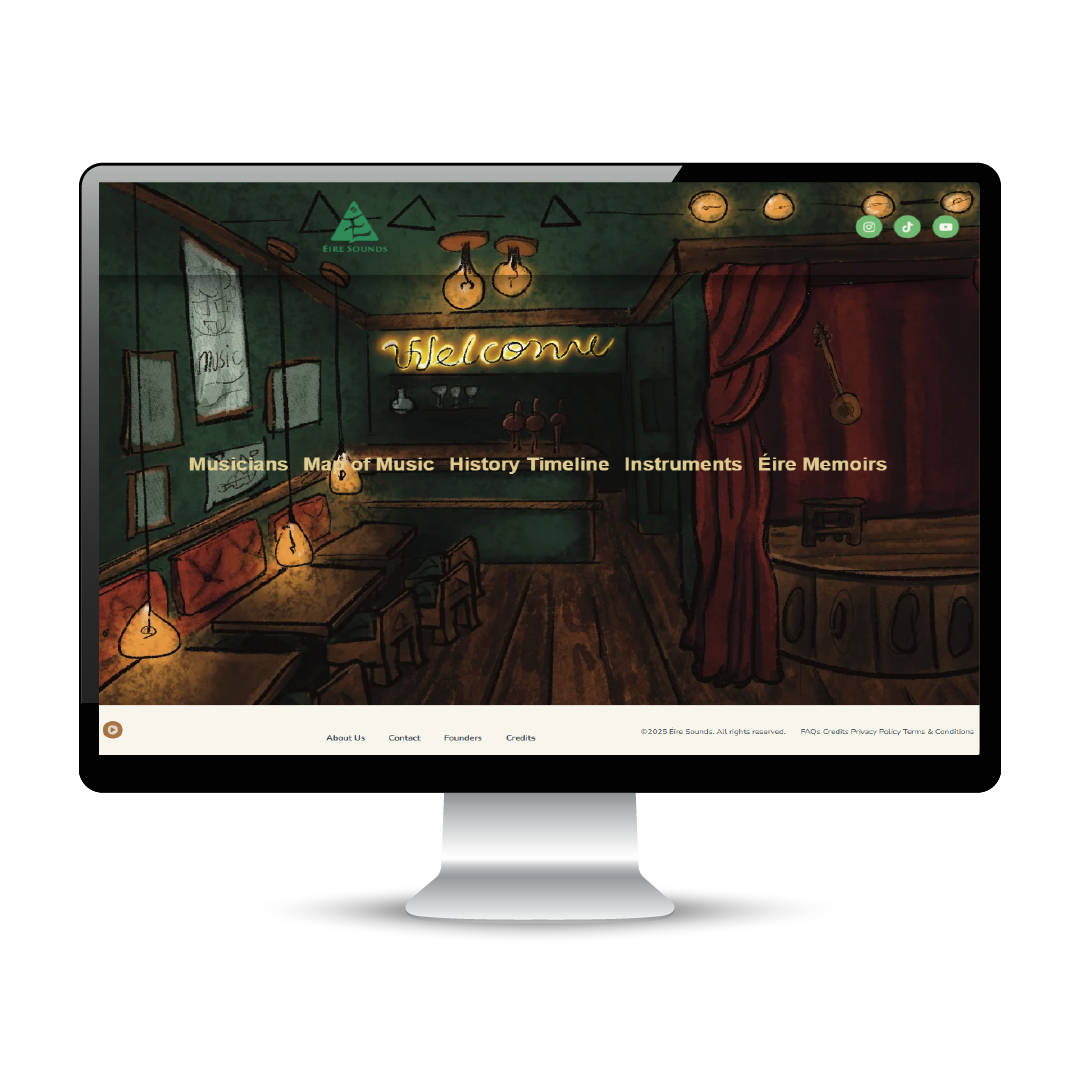
01 · Musicians
Musician Profiles
From street artists to contemporary acts like Kneecap, each profile combines biography, audio, and photography — placing musicians within cultural context rather than just listing their work.
02 · Map
Interactive Music Map
A geolocated map of Dublin and beyond — with custom icons for pubs, events, historical sites, and concerts — lets users explore where music actually lives, not just where it's archived.
03 · Timeline
History Timeline
A chronological journey through Irish music's evolution — from the Gaelic Revival to the modern trad boom — using scroll-based storytelling, layered with emigration, language, and cultural milestones.
04 · Instruments
Instrument Guides
Strings, percussion, wind, and voice — each instrument section is presented with visual guides, audio samples, and cultural context. The page uses a backstage metaphor to invite intimacy with the tools of the tradition.
05 · Audio
Archive Interviews
Original audio and video interviews with Richie Berger (uilleann piper), John Mahon (street musician), The Cobblestone pub managers, and The Brazen Head — real voices, recorded on location in Dublin.
06 · Éire Memoirs
Community Memory Archive
A submission portal where users contribute their own stories, photos, and memories — from ballads at family funerals to pub session discoveries — making the platform a living, growing tribute.
Every design decision in Éire Sounds asked the same question: does this make the user feel closer to Irish music? The result is a platform where visual storytelling, real voices, and interactive discovery work together.
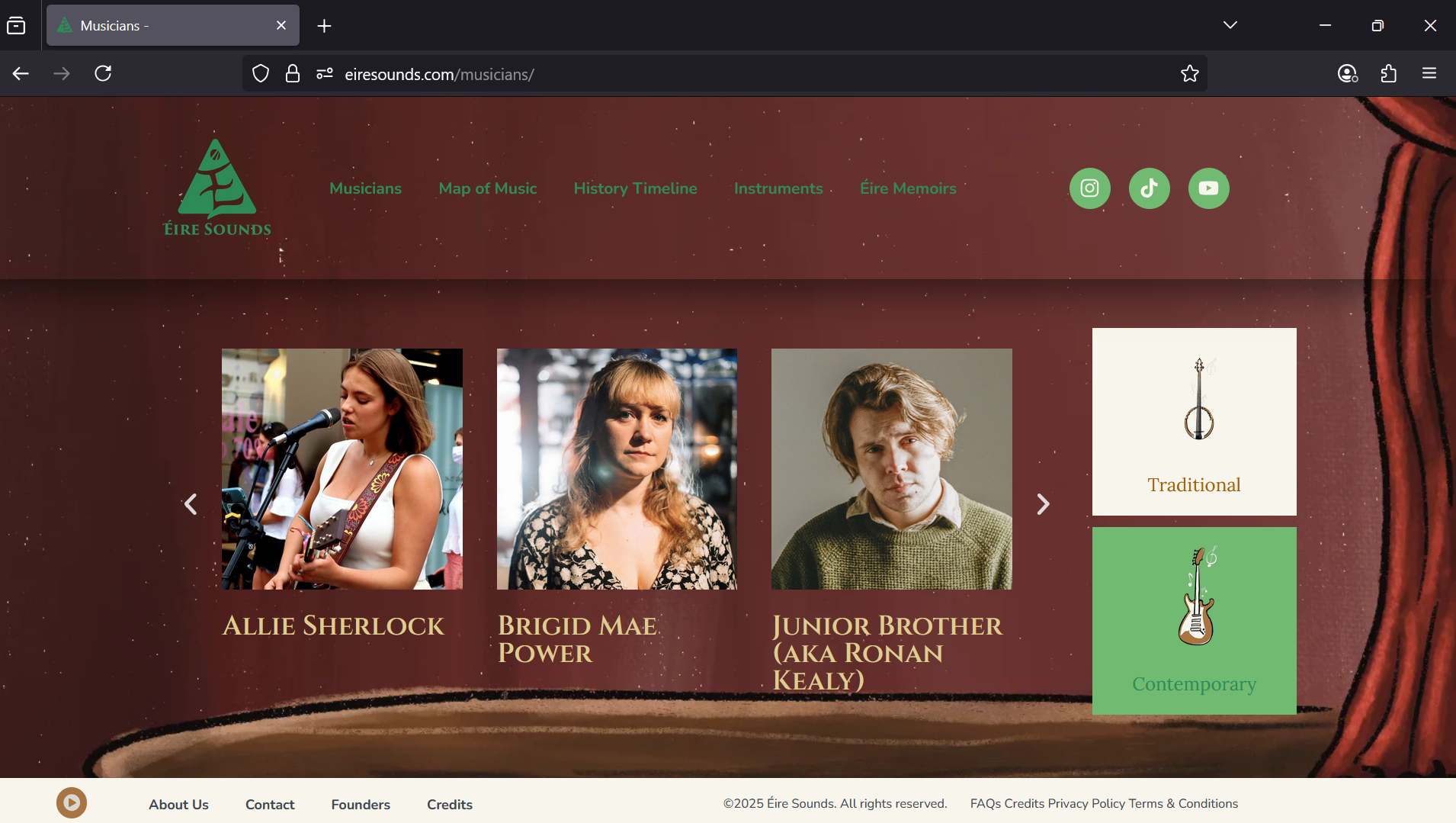
Musicians Page
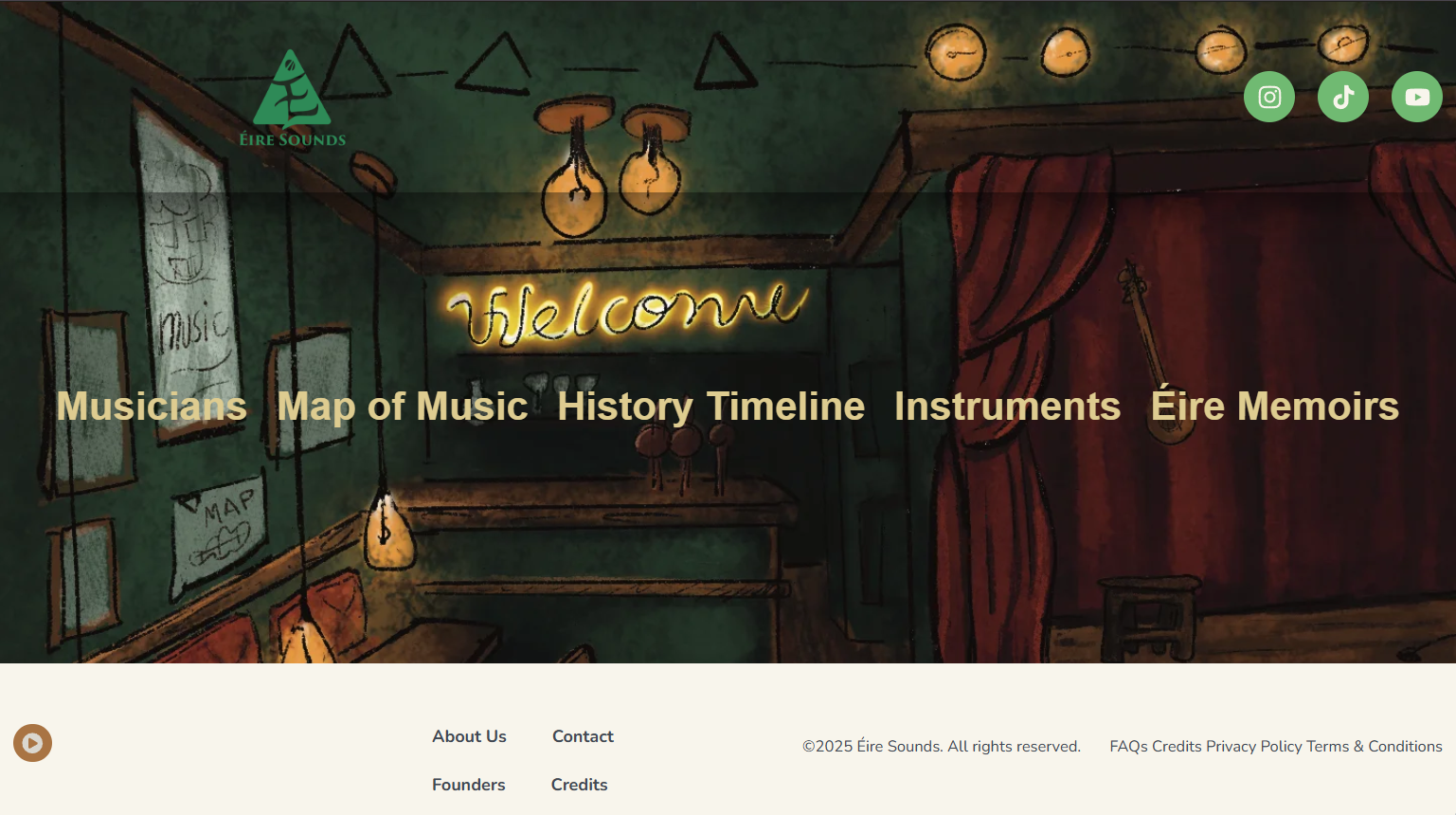
Screenshot of the Musicians section with the stage background — the warm amber setting that establishes the pub as a symbolic entry into Ireland's soundscape.
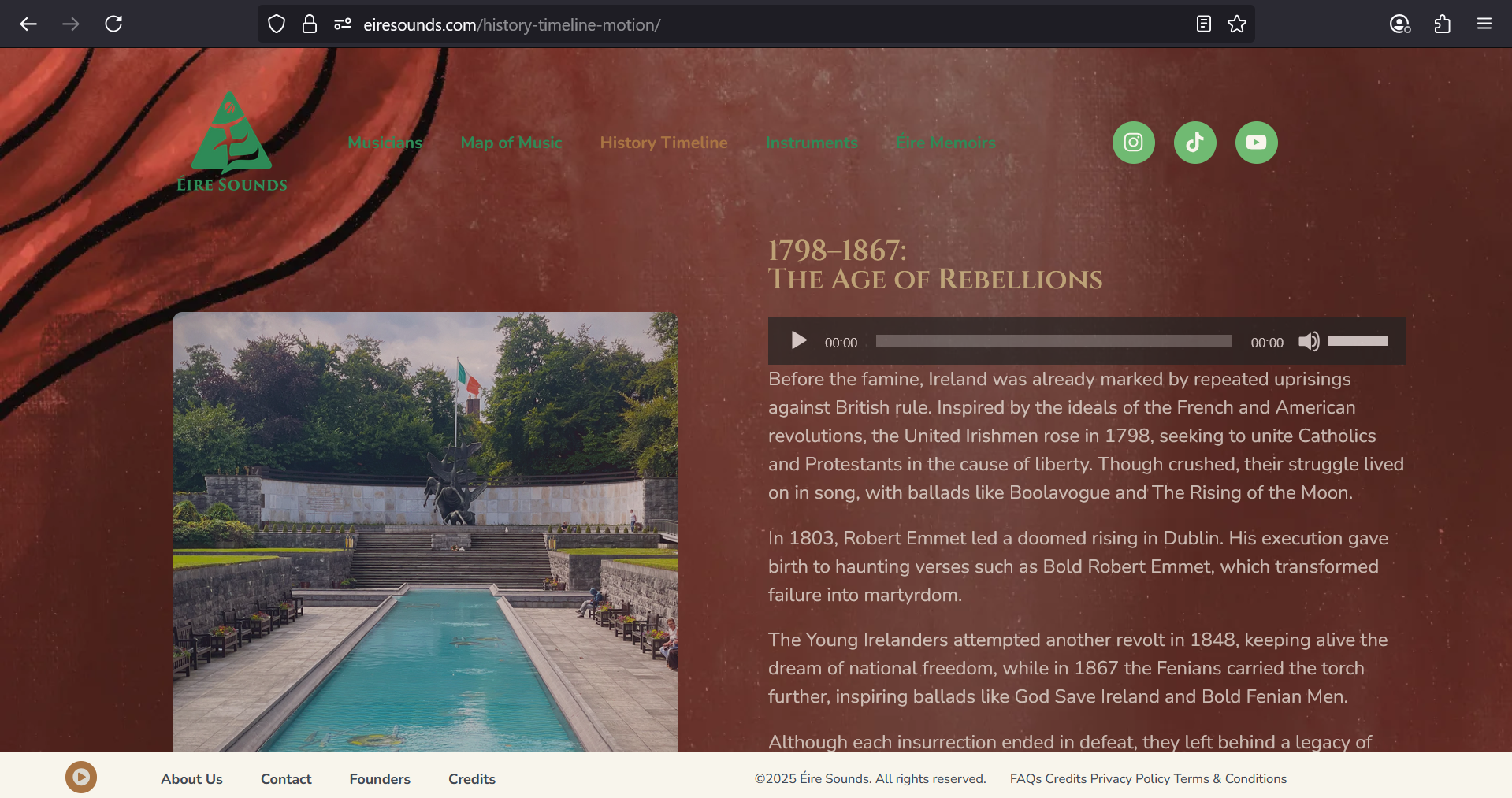
History Timeline Page
Screenshot of the Timeline with the theatre curtains background — the visual metaphor of discovery and the staged revelation of the past.
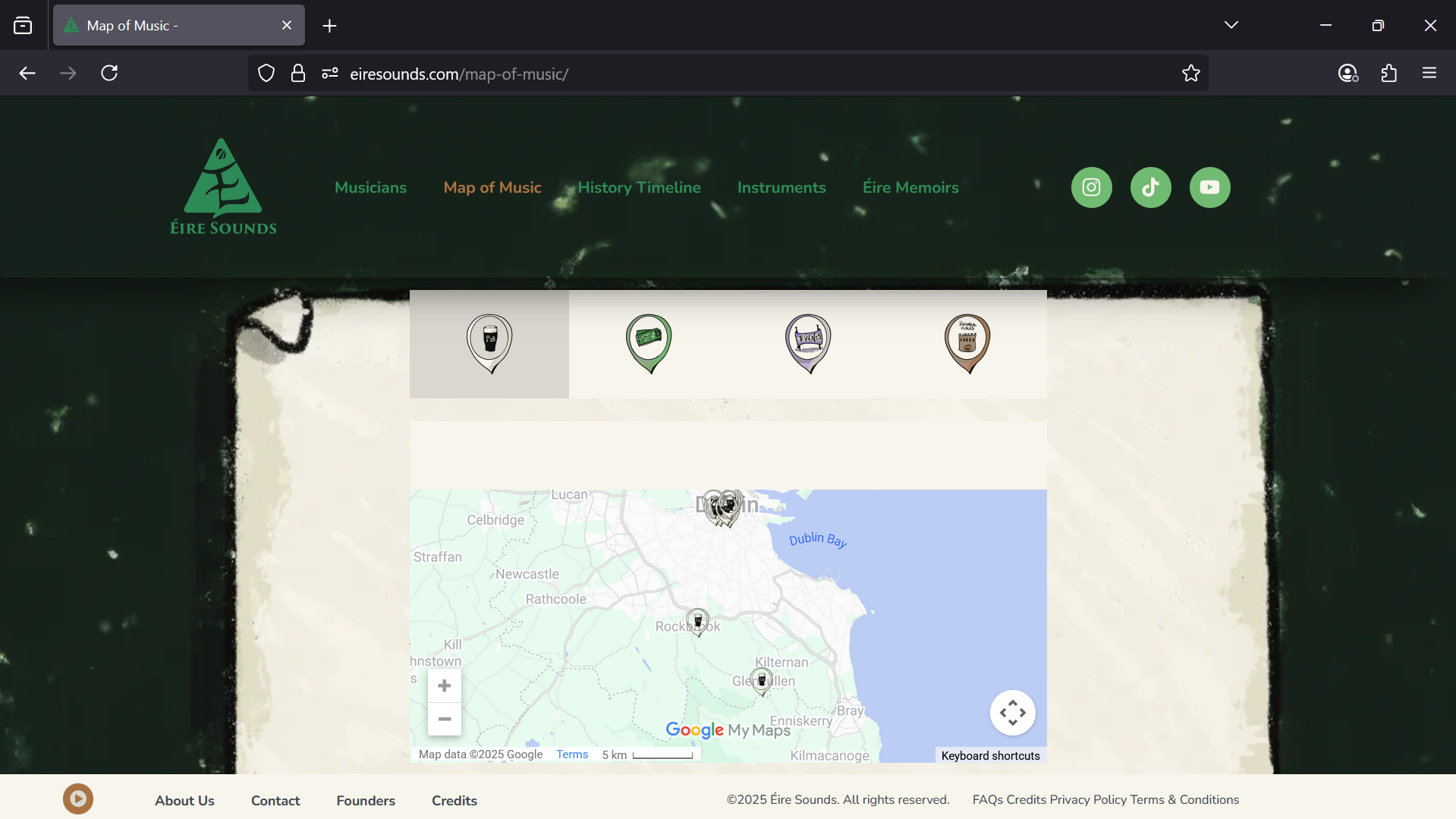
Map of Music Page
The interactive map page with the green wall and paper notice board background — grounding the feature in the lived social practice of music discovery.
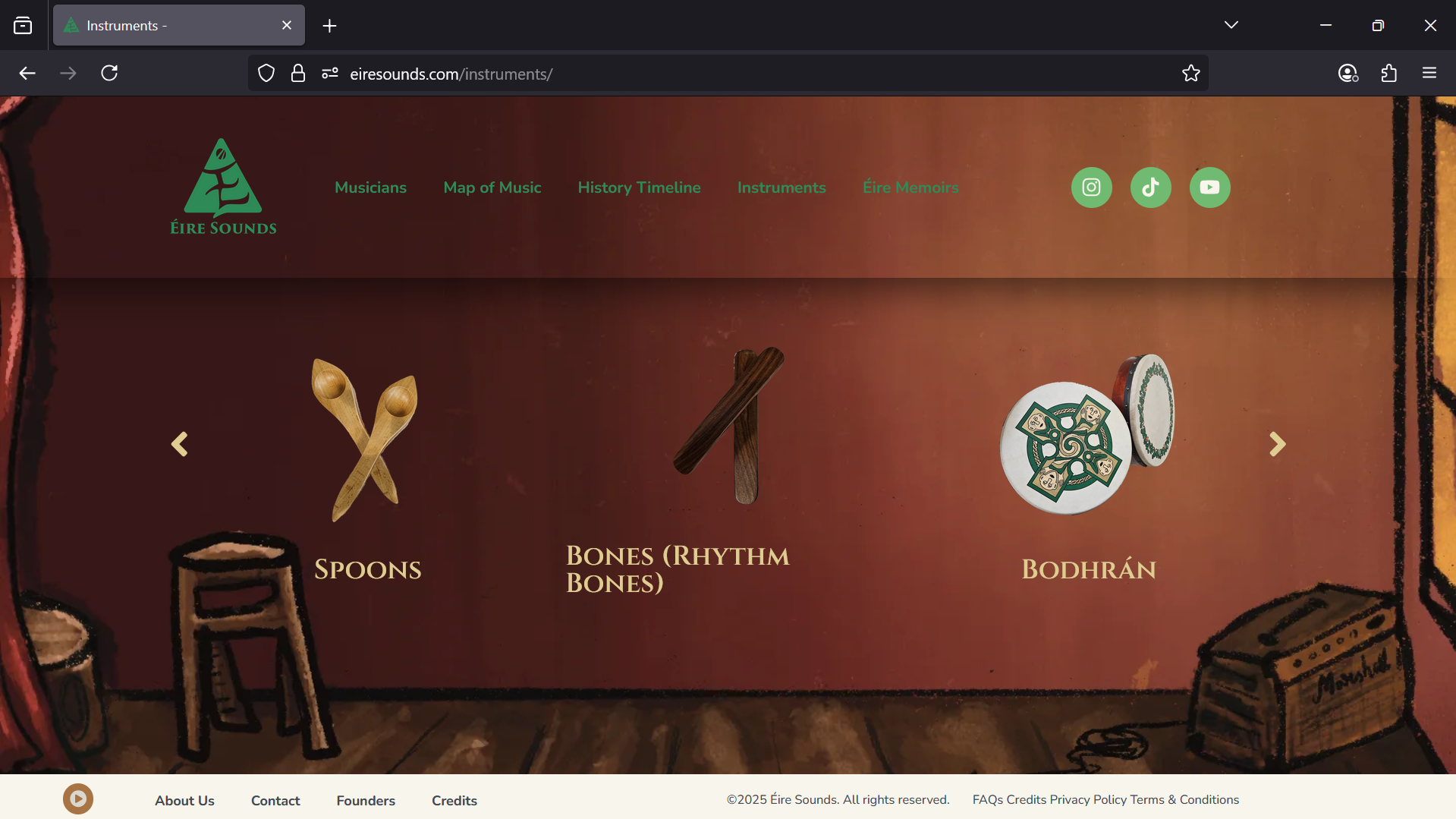
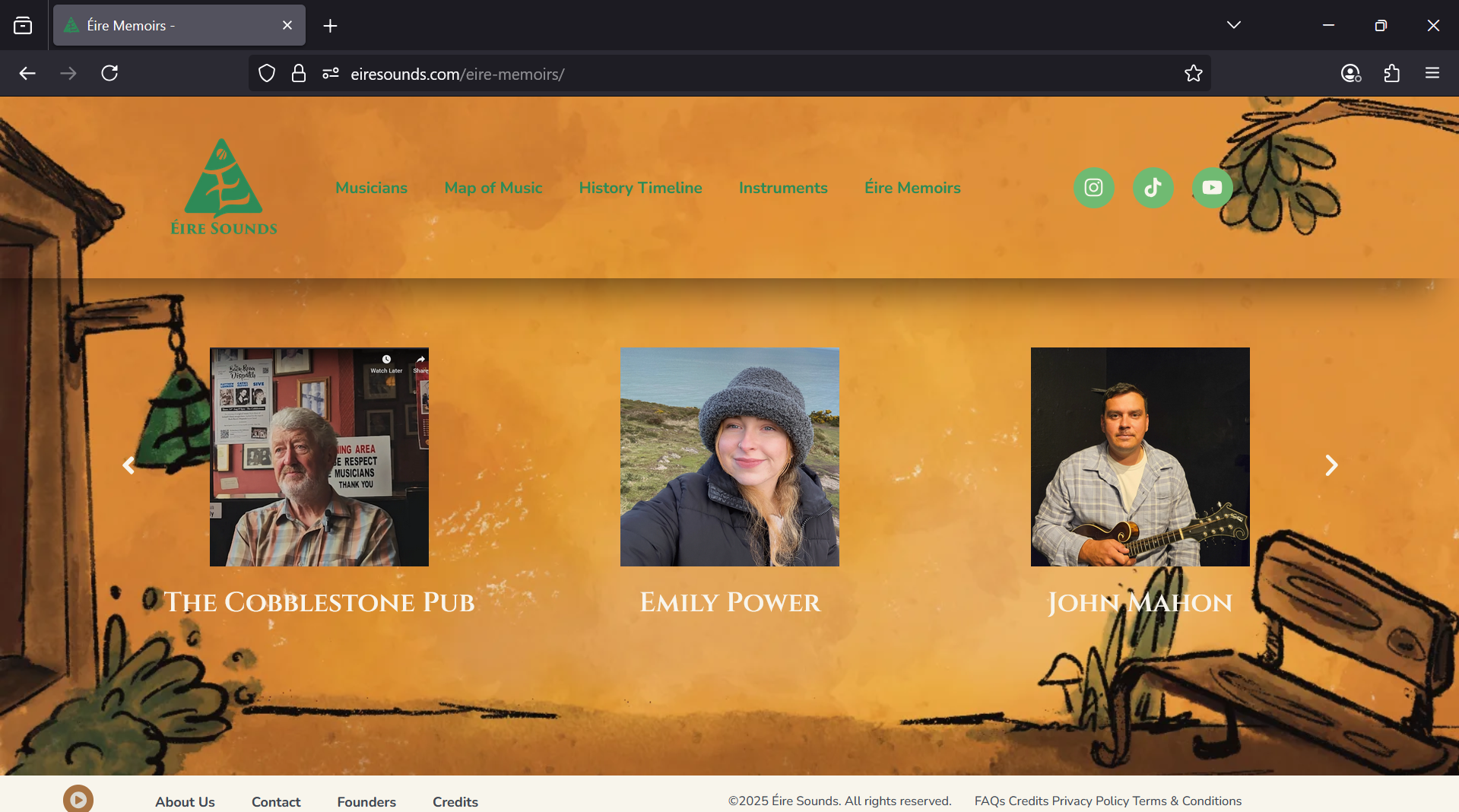
Instruments & Éire Memoirs
The backstage instruments page and the outdoor evening scene of the Éire Memoirs section — the narrative journey from performance to personal reflection.
Design Language
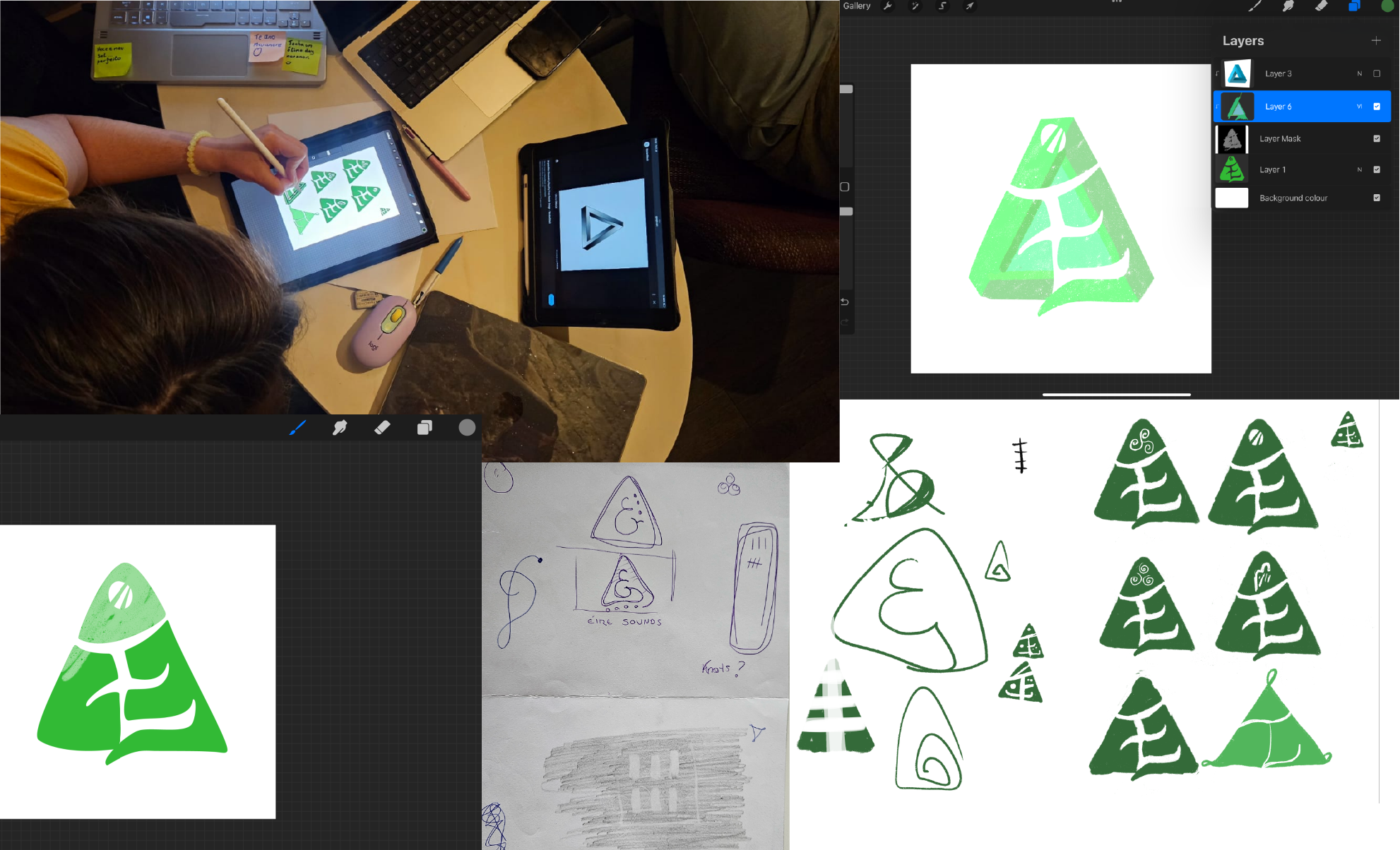
Naming & logo
"Éire" — the native Irish name for Ireland. "Sounds" — evoking music, storytelling, memory, and place. Short, poetic, and inclusive.
A Celtic triangle with the "É" carved in negative space, and a circular cutout — a sound hole, referencing the bodhrán. Modern, minimal, rooted in tradition.
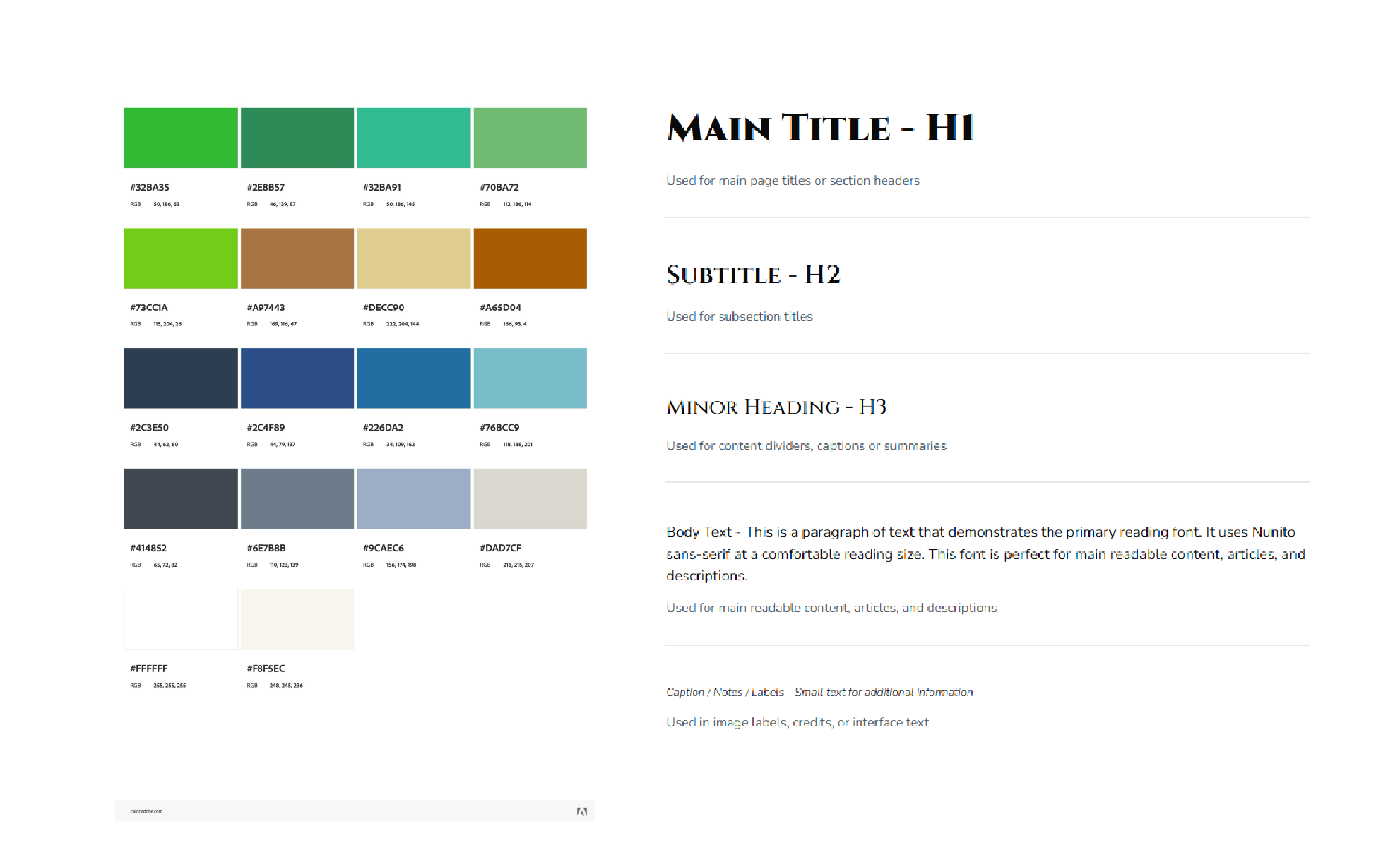
Typography & Colour Palette
Cinzel for headings — classical, inscriptive, a sense of permanence. Nunito for body — warm, readable, friendly. Two fonts, two registers, one voice.
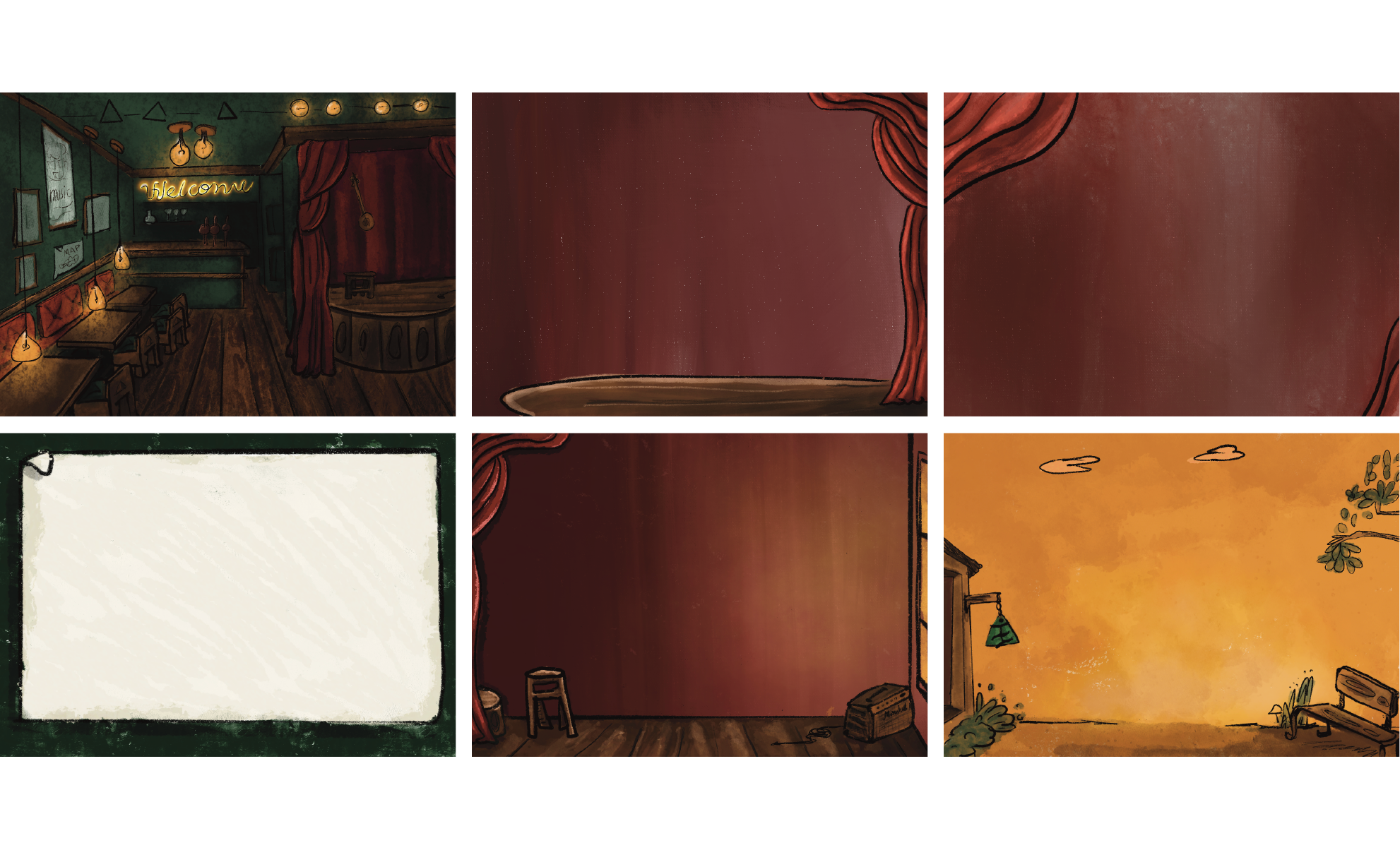
Greens from Ireland's landscapes. Golds from aged wood and parchment. Blues from sky and stone. Hand-illustrated backgrounds, drawn in Procreate, give every section its own texture and metaphor.
The visual identity was built to feel like Ireland itself, warm, storied, and grounded. Every design choice had a cultural reason behind it.
05. Outcome
A platform that resonated
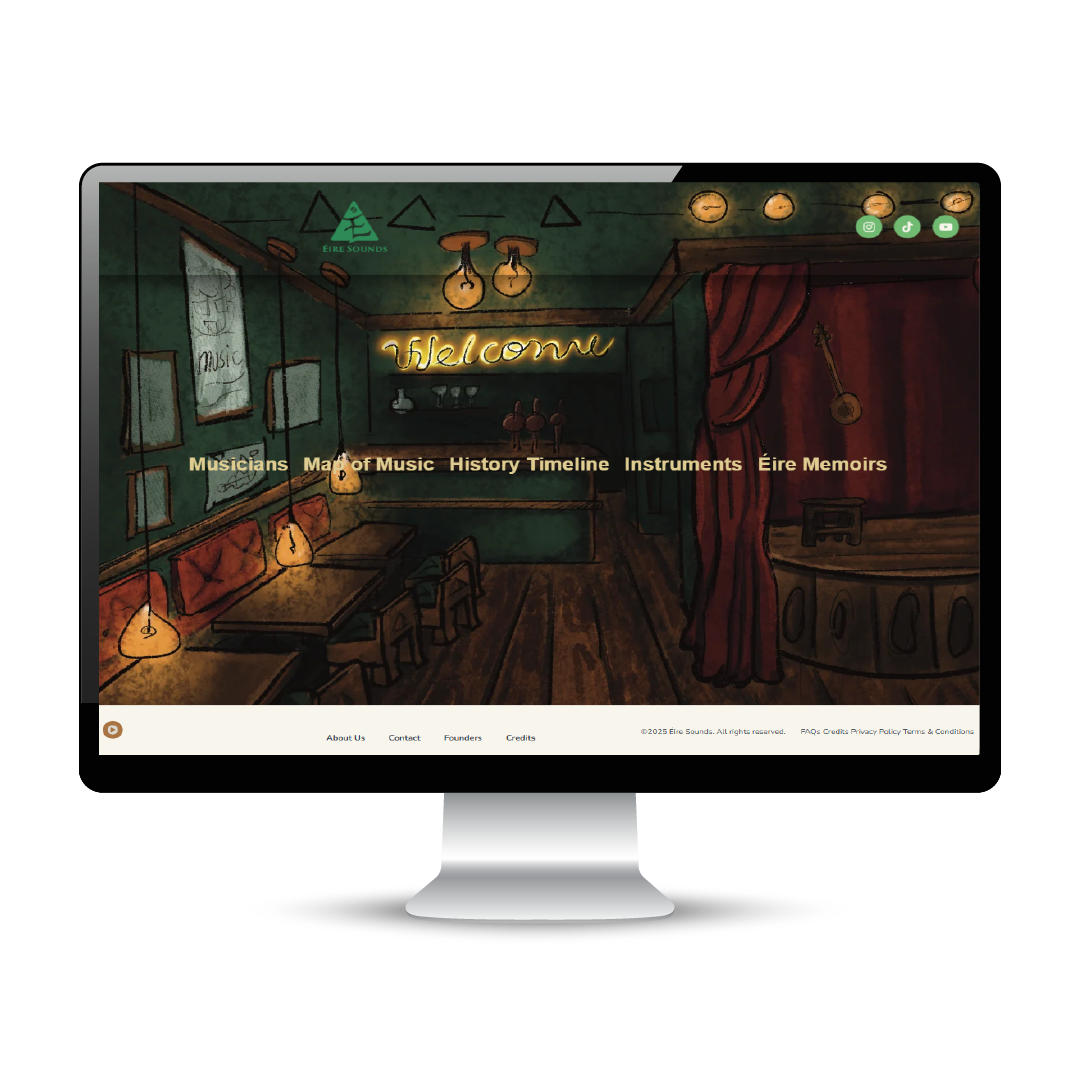
Éire Sounds launched as a fully functional website built in WordPress with Elementor, delivering on every core objective: immersive multimedia storytelling, accessible navigation, and a visual identity that felt authentic to Irish culture.
✓ A complete multi-page website covering Musicians, History Timeline, Map of Music, Instruments, Éire Memoirs, and About — with a consistent visual language across every section.
✓ Original audio and video interviews recorded on location at The Cobblestone Pub, The Brazen Head, Waltons Music, and Fleadh Cheoil 2025 — bringing real Irish voices into the platform.
✓ Hand-drawn background illustrations in Procreate gave each section a unique narrative atmosphere, making the site feel crafted rather than templated.
✓ A distinctive brand identity — including logo, colour palette, typography system, and custom icons — all designed from the ground up to reflect Irish heritage with a modern lens.
✓ Responsive design tested across desktop, tablet, and mobile, with WCAG accessibility standards applied to navigation, contrast, and content structure.
✓ Positive user feedback from both Irish and international testers, confirming the platform's emotional impact and usability across diverse cultural backgrounds.
"The website feels modern and respectful of Irish culture. It's easy to navigate, and I loved how the interviews, photos, and audio come together to tell real stories. The History Timeline is beautifully done."
Nicky O'Connor — Irish user
06.Learnings
What this project reinforced
Designing for culture is designing for people. Every lesson from this project was earned in the field, in the pub, or 90 minutes before the final presentation when WordPress crashed.
01
Research is not a phase: it's the foundation
Sitting in The Cobblestone and listening to real musicians talk about tradition uncovered things no desk research ever could. The emotional depth of the platform came directly from time spent in the field, not in front of a screen.
02
Designing for two opposite users sharpens every decision
Cian and Camila were not just personas — they were a constant creative tension. Every navigation choice, every piece of content, every layout decision had to work for both of them. That pressure made the design better.
03
Creative navigation doesn't automatically mean usable navigation
The original logo-triggered menu was visually strong and symbolically meaningful. But it failed both user testing and accessibility standards. Replacing it with a conventional nav bar was humbling, and the right call.
04
Aesthetic vision and technical constraints are always in conversation
WordPress and Elementor enabled speed and flexibility, but also imposed limits. The hand-drawn backgrounds, custom icons, and multimedia integrations were solutions found within those limits, not despite them.
07. If I returned to this
What I'd do differently
A dedicated mobile-first redesign
Camila's persona was mobile-first, but the site was ultimately designed desktop-down. A full mobile-first pass would transform the map and audio guide experience for users on location.
Deeper Irish language integration
The platform gestures toward Irish-language content but doesn't fully commit. A genuine bilingual toggle, with Irish-language audio options and Gaeilge labels in the UI, would honour Cian's world far more completely.
A more scalable content system
As a live cultural archive, Éire Sounds should grow over time. I'd design a proper CMS structure from the start — with clear editorial workflows, content governance, and a design system that non-designers could maintain.